Tell us about the job
Takes about a minute. No obligation.
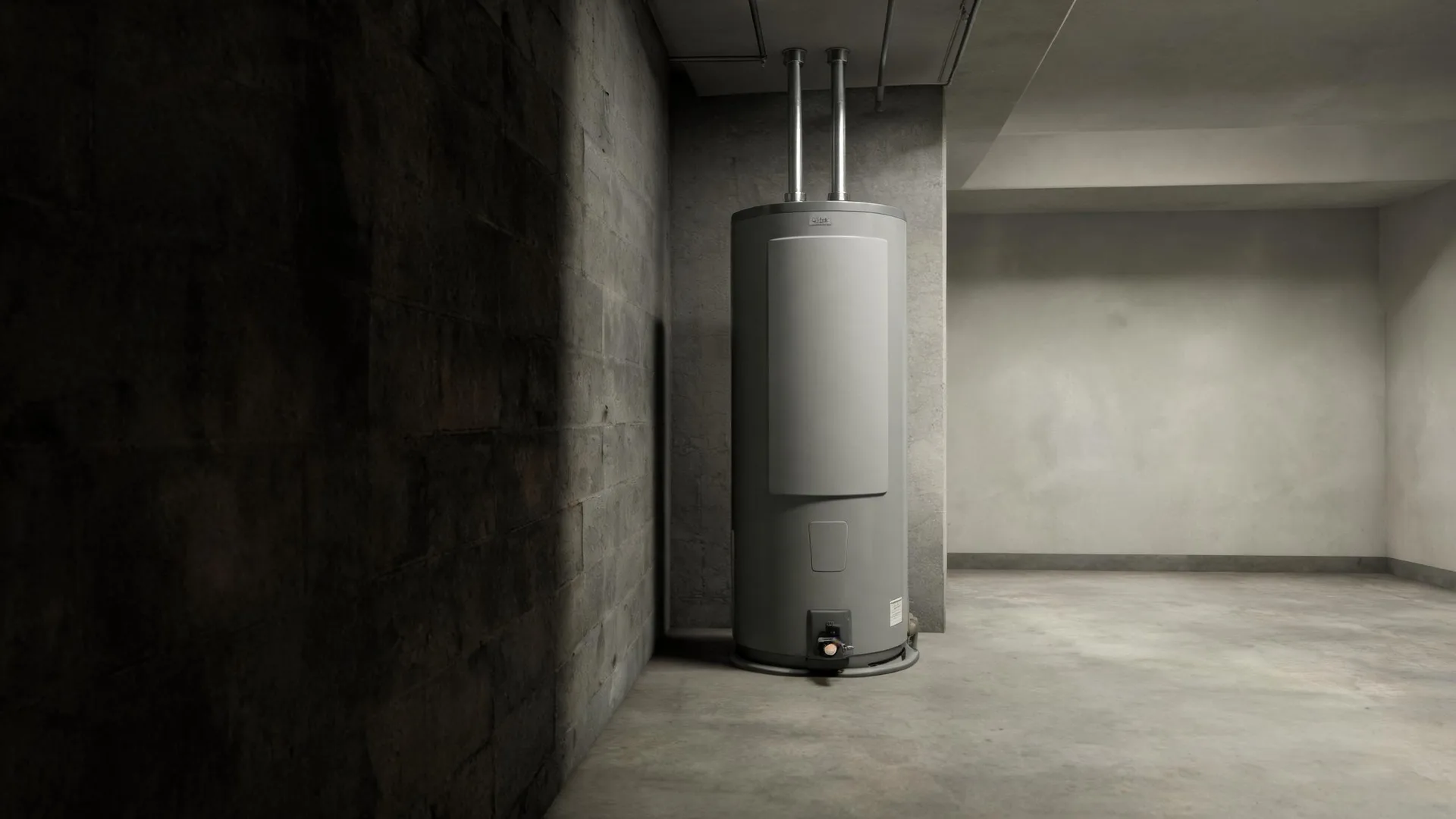
A contractor sizing up a water heater repair in Franklin County starts with the unit itself: how old it is, whether the anode rod has been replaced, and whether the original installation left the pressure relief valve in a position it can actually do its job. 47 severe weather events were recorded in Franklin County, Indiana between 2015 and 2024. At that rate, severe weather is an occasional event here rather than a grinding seasonal load, which means it sits low on the list of explanations when a water heater starts failing. Sediment accumulation, a corroded element, or a tank that has simply run its course will account for most of what a contractor finds.
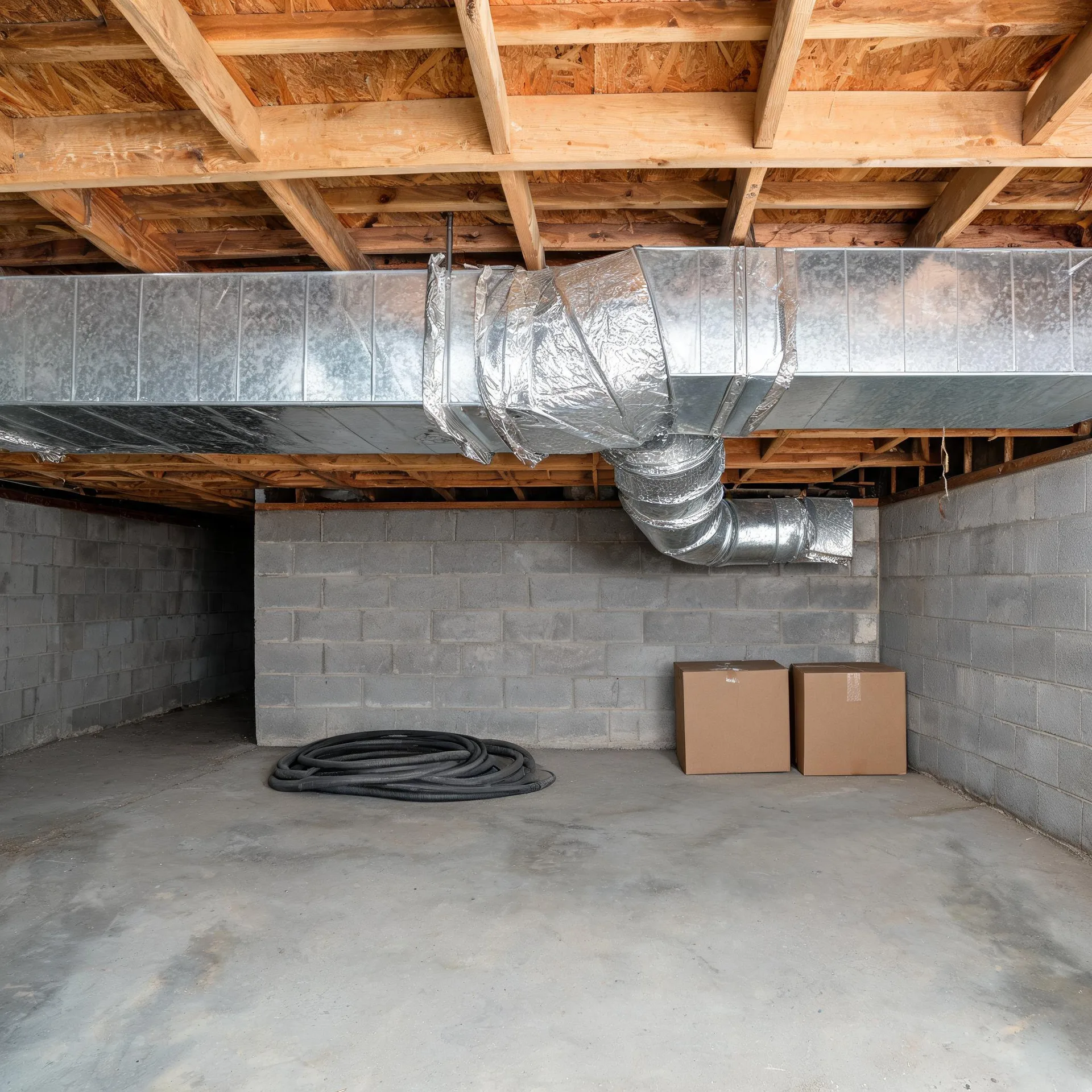
Pipe fittings and supply connections in a house this old were installed once and left alone, and what a contractor finds when they open up around a water heater is often the real job: mineral scale packed into the drain valve, corroded flex lines, or deteriorated fittings that have to come out before the heater itself can be properly serviced. Half the homes in Franklin County, Indiana were built in 1981 or earlier (2020-2024 ACS 5-year). That span of time is long enough that sediment accumulation and connection wear are not incidental findings but expected ones. The equipment may be the reason for the call, but what the opened installation actually contains sets the repair scope.
The Parts of a Water Heater a Contractor Checks During Repair
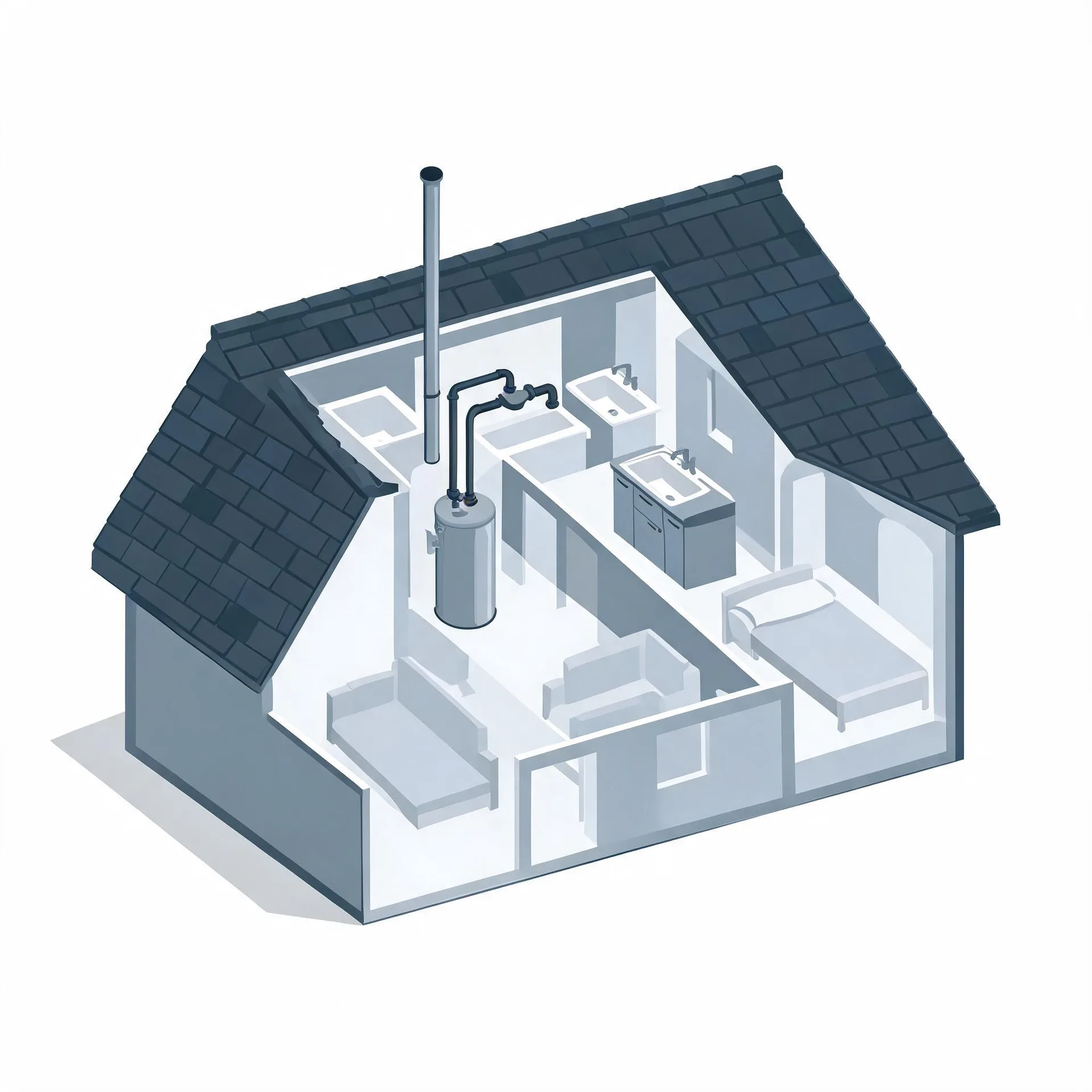
The tank is the piece a homeowner notices first, sitting in a utility room, basement, or closet and holding the water that gets heated. Attached to it are the heating elements or burner assembly, depending on whether the unit runs on electricity or gas, and these are where a contractor looks when hot water stops arriving or arrives inconsistently. The thermostat, mounted on the tank itself, controls when those elements fire.
The pressure relief valve sits on the side or top of the tank and releases if internal pressure climbs beyond a safe point. The anode rod runs down through the tank and slows corrosion from the inside. The inlet and outlet connections at the top of the tank are where cold water enters and heated water leaves, and fittings or valves at those points are common sources of leaks.
The drawing shows a general layout of these components, and a licensed contractor determines which ones apply to the specific unit and installation in your home.
Find a contractor in Franklin CountyFranklin County, Indiana, by the numbers
47 severe weather events were recorded in Franklin County, Indiana between 2015 and 2024.
NOAA National Centers for Environmental Information, Storm Events Database, bulk CSV export, events 2015-01-01 through 2024-12-31.Half the homes in Franklin County, Indiana were built in 1981 or earlier (2020-2024 ACS 5-year).
U.S. Census Bureau, 2020-2024 American Community Survey 5-Year EstimatesFranklin County, Indiana holds 9,796 housing units (2020-2024 ACS 5-year).
U.S. Census Bureau, 2020-2024 American Community Survey 5-Year EstimatesOwners occupy 81.5% of the occupied homes in Franklin County, Indiana (2020-2024 ACS 5-year).
U.S. Census Bureau, 2020-2024 American Community Survey 5-Year EstimatesSevere Weather Events in Franklin County
Extreme weather puts strain on water heaters, forcing them to work harder and recover faster after each weather event. How much of that stress a unit absorbs depends on what the local climate actually delivers, which is why the pattern here in Franklin County shapes the repair picture.
47 severe weather events, 2015–2024. Source: NOAA National Centers for Environmental Information, Storm Events Database.