Tell us about the job
Takes about a minute. No obligation.
A contractor quoting a water heater installation in Perry County is working out what the household actually needs, not compensating for a punishing weather environment. 54 severe weather events were recorded in Perry County, Indiana between 2015 and 2024. At that rate, severe weather is an event here, not a standing condition bearing down on every system. Age of the existing unit, the quality of the original installation, and how the home uses hot water are what shape the job. Those are the variables a contractor prices and sizes around.
Ductwork and electrical service sized for older equipment shape what a water heater installation actually requires in Perry County. Half the homes in Perry County, Indiana were built in 1976 or earlier (2020-2024 ACS 5-year). What a contractor finds behind the walls of a house built that far back is infrastructure laid in for something different from what runs in houses today, and the gap between those two sets of assumptions is where the installation work either fits or does not. A water heater going into stock of this age gets priced around what the existing supply lines, venting path, and electrical service will actually support.
What a Water Heater Installation Covers
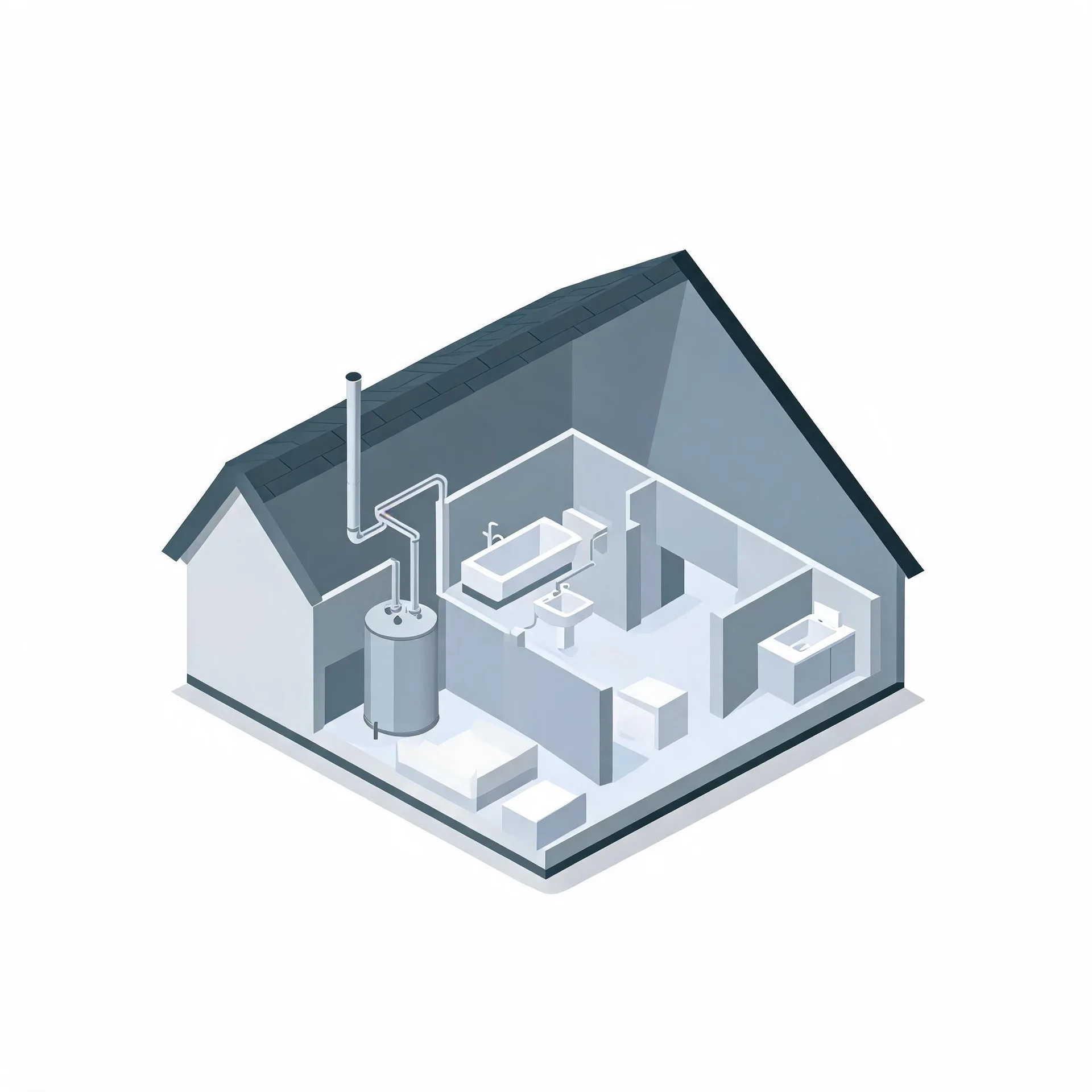
The storage tank is the piece most homeowners already picture: a cylindrical vessel that sits in a utility room, basement, or garage and holds water at a set temperature until a tap calls for it. Attached to the tank are the inlet and outlet connections, the pressure relief valve, and the drain valve, each mounted directly on the unit.
The flue or vent pipe runs from the top of a gas unit up through the wall or ceiling and carries combustion gases out of the house. A gas supply line feeds the burner assembly at the base of the tank, while an electric unit draws from dedicated wiring that connects at the top. The thermostat, which sits against the tank or inside an access panel, is set during installation to the temperature the household will run at.
The drawing shows a typical layout, and a licensed contractor determines exactly what applies to this house based on its fuel source, venting path, and existing connections.
Find a contractor in Perry CountyPerry County, Indiana, by the numbers
54 severe weather events were recorded in Perry County, Indiana between 2015 and 2024.
NOAA National Centers for Environmental Information, Storm Events Database, bulk CSV export, events 2015-01-01 through 2024-12-31.Half the homes in Perry County, Indiana were built in 1976 or earlier (2020-2024 ACS 5-year).
U.S. Census Bureau, 2020-2024 American Community Survey 5-Year EstimatesPerry County, Indiana holds 8,597 housing units (2020-2024 ACS 5-year).
U.S. Census Bureau, 2020-2024 American Community Survey 5-Year EstimatesOwners occupy 75.5% of the occupied homes in Perry County, Indiana (2020-2024 ACS 5-year).
U.S. Census Bureau, 2020-2024 American Community Survey 5-Year EstimatesSevere Weather in Perry County
Water heaters work harder when outdoor conditions swing hard, and Perry County's weather record shapes how much that equipment gets pushed over its lifetime. What happens outside is part of the load calculation for any installation here.
54 severe weather events, 2015–2024. Source: NOAA National Centers for Environmental Information, Storm Events Database.