Tell us about the job
Takes about a minute. No obligation.
A contractor quoting a water heater installation in Jay County starts from the home's hot water demand and the condition of what is already there, not from any assumption that the equipment has been battered by the climate. 41 severe weather events were recorded in Jay County, Indiana between 2015 and 2024. At that rate, severe weather here is an event, not a constant. A system that has underperformed or failed almost certainly did so because of age, improper sizing at the original install, or maintenance gaps. Those are the variables a contractor will want to establish before specifying the replacement.
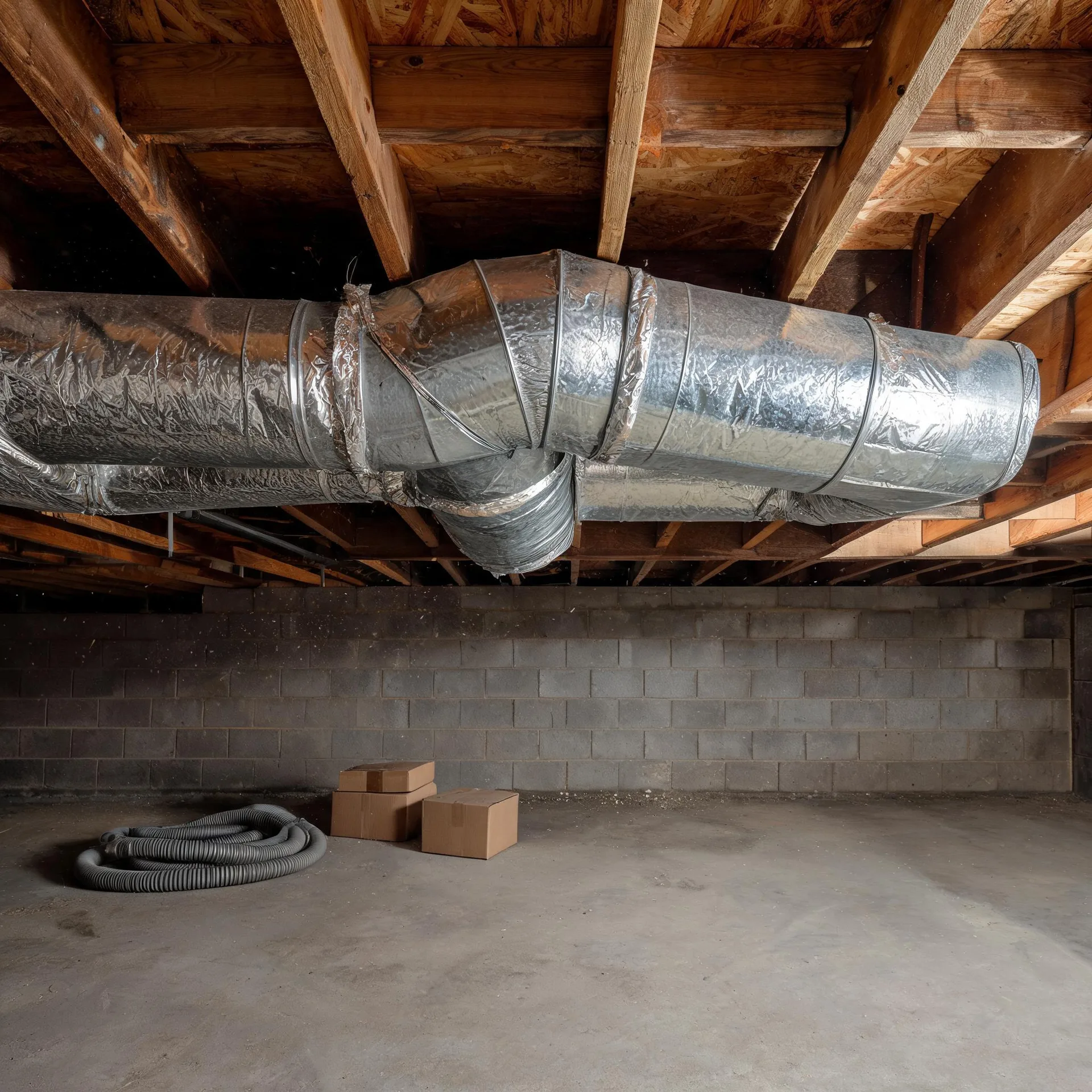
Ductwork laid down for one era of equipment does not automatically serve the next. Half the homes in Jay County, Indiana were built in 1959 or earlier (2020-2024 ACS 5-year). That depth of age means a significant share of homes in Jay County have venting and supply configurations sized for older standards, and a contractor pricing a water heater installation has to work out what those passages will carry before the new unit is selected. What the house already contains sets the scope of the job as much as anything on the spec sheet.
What Goes Into a Water Heater Installation
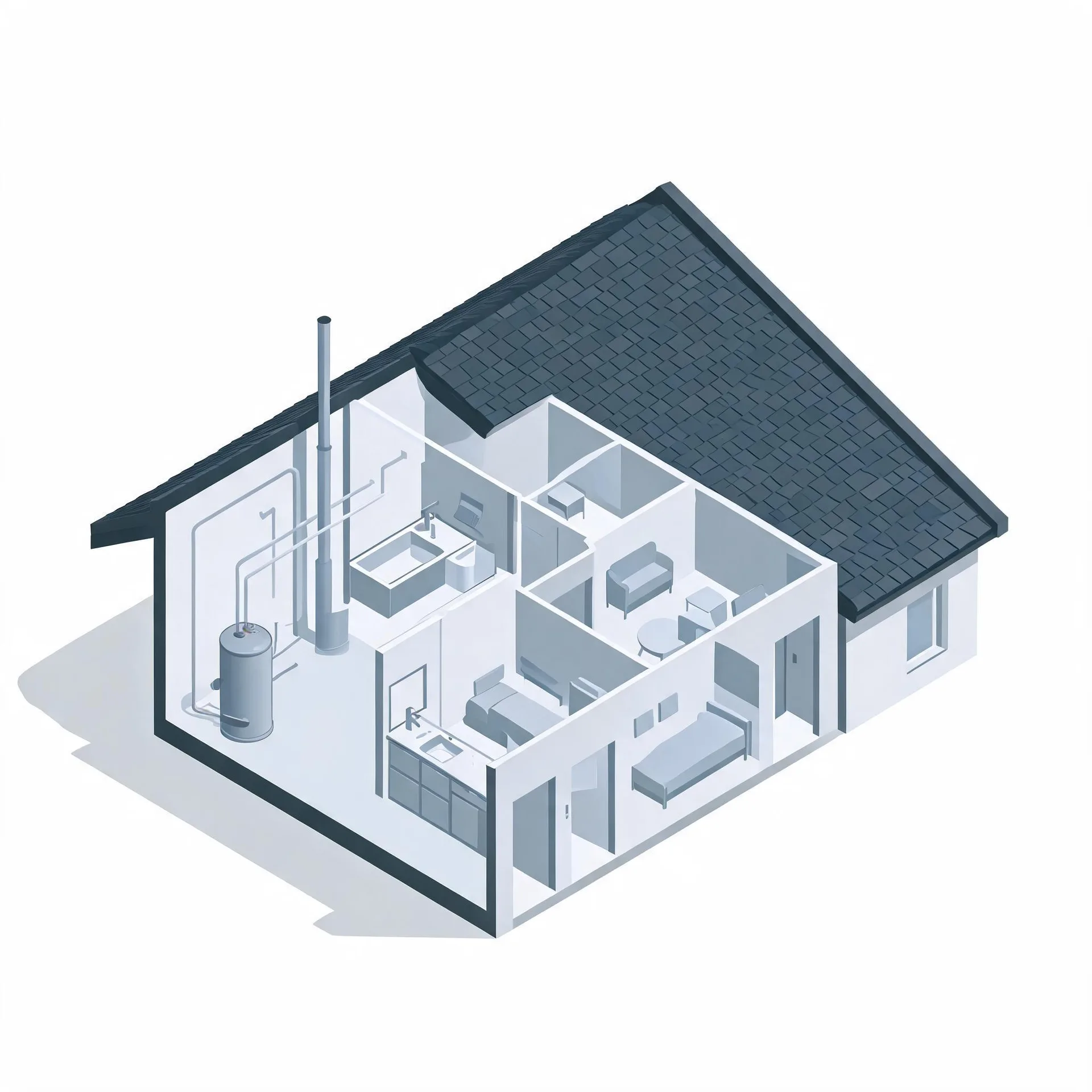
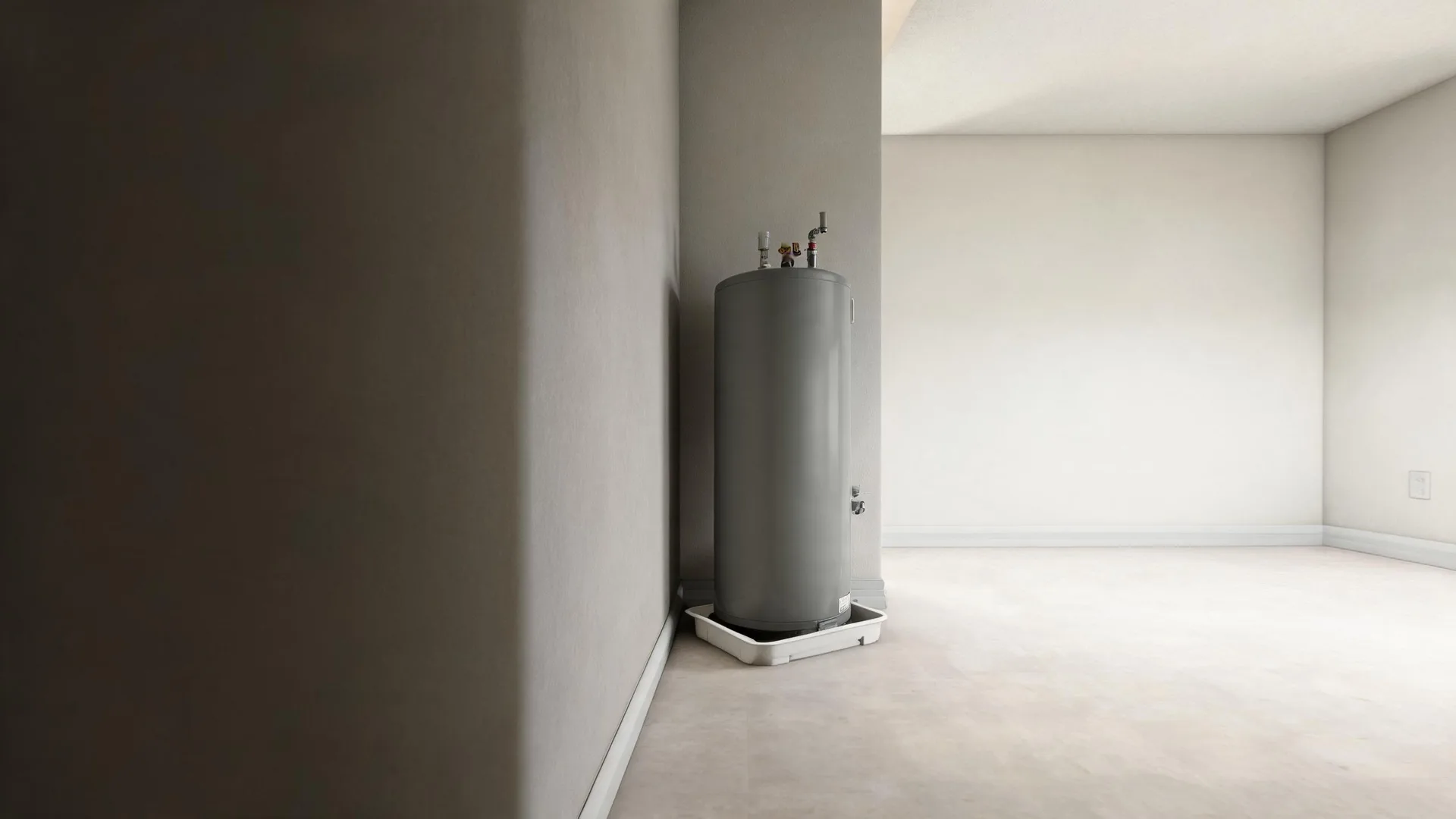
The tank or tankless unit is the centerpiece of the system, sitting in a utility space, basement, or closet, and its job is to heat and hold water at a set temperature until any tap in the house calls for it. A pressure relief valve mounts directly on the unit and releases if pressure inside climbs past a safe point.
Cold water enters through a dedicated supply line connected at the top or side of the unit, and hot water leaves through a separate outlet that runs to every fixture in the house. A drain valve sits near the base, and the flue or venting pipe runs from the unit up and out of the structure to carry combustion gases outside.
The drawing shows a typical layout, and a licensed contractor determines exactly what applies to this house based on what they find on site.
Find a contractor in Jay CountyJay County, Indiana, by the numbers
41 severe weather events were recorded in Jay County, Indiana between 2015 and 2024.
NOAA National Centers for Environmental Information, Storm Events Database, bulk CSV export, events 2015-01-01 through 2024-12-31.Half the homes in Jay County, Indiana were built in 1959 or earlier (2020-2024 ACS 5-year).
U.S. Census Bureau, 2020-2024 American Community Survey 5-Year EstimatesJay County, Indiana holds 8,904 housing units (2020-2024 ACS 5-year).
U.S. Census Bureau, 2020-2024 American Community Survey 5-Year EstimatesOwners occupy 79.9% of the occupied homes in Jay County, Indiana (2020-2024 ACS 5-year).
U.S. Census Bureau, 2020-2024 American Community Survey 5-Year EstimatesSevere Weather Events in Jay County
Water heaters work harder when outdoor conditions swing hard, and in Jay County that workload is shaped by local weather patterns. Knowing what the climate actually does here helps a contractor size and install equipment that holds up to it.
41 severe weather events, 2015–2024. Source: NOAA National Centers for Environmental Information, Storm Events Database.