Tell us about the job
Takes about a minute. No obligation.
A water heater replacement quote in Fayette County starts with the unit itself. 43 severe weather events were recorded in Fayette County, Indiana between 2015 and 2024. At that rate, severe weather is an occasional event here, and a contractor who blames storm load for a failing tank is reaching. What actually shortens a water heater's service life in this area is sediment accumulation, a neglected anode rod, or a first install that undersized the unit for the household demand. Those are the conditions a licensed contractor examines before recommending a replacement and before pricing the new unit.
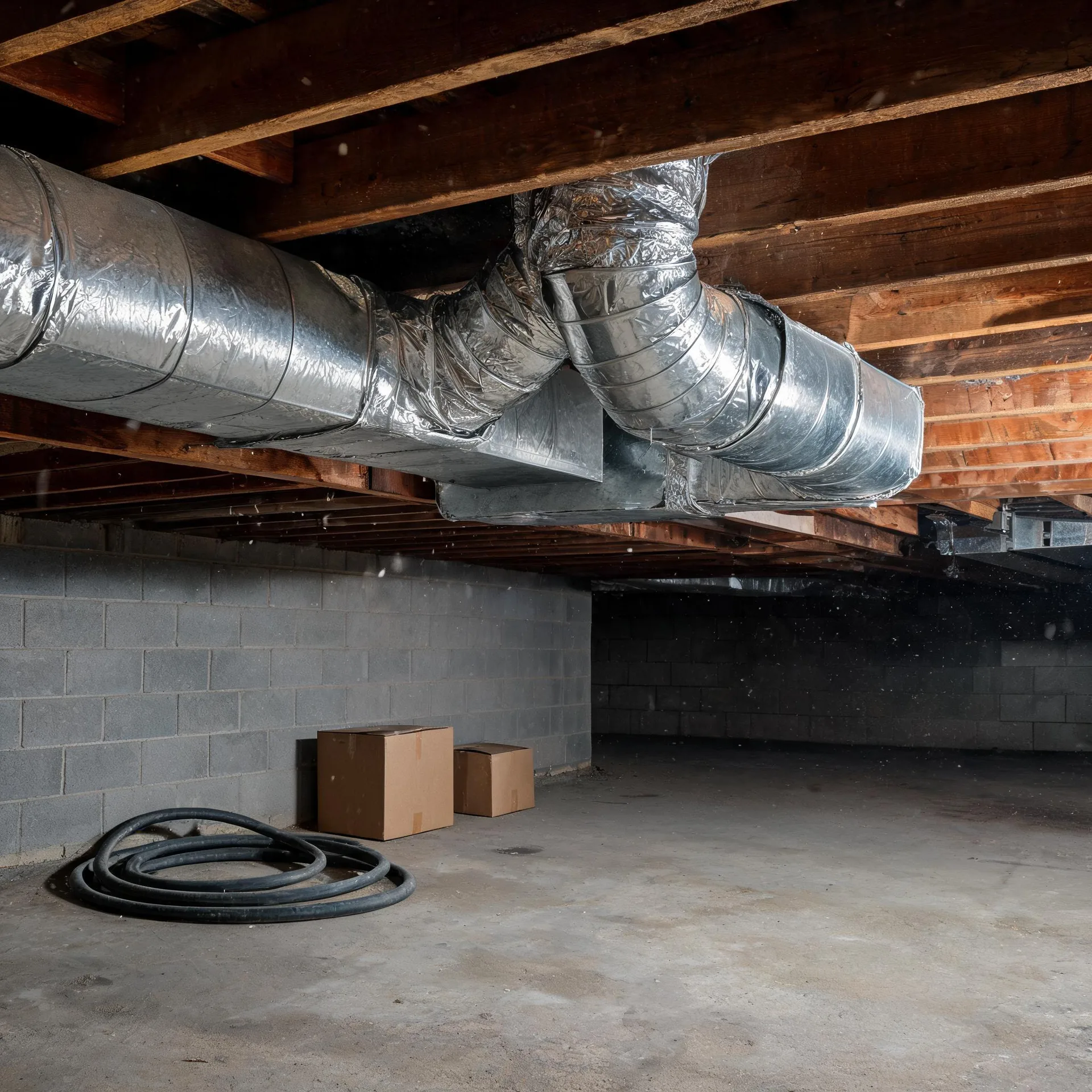
Ductwork and electrical service in houses this old were designed around the equipment of their era, and what a contractor finds when they open up the existing runs decides more about a water heater installation than the unit itself does. Half the homes in Fayette County, Indiana were built in 1962 or earlier (2020-2024 ACS 5-year). That age of construction routinely means the routing, clearances, and electrical capacity were put in for something that no longer matches what a new water heater draws or needs. A contractor prices the new equipment quickly; sizing it to what the house can actually support takes the work.
What Goes Into a Water Heater Installation
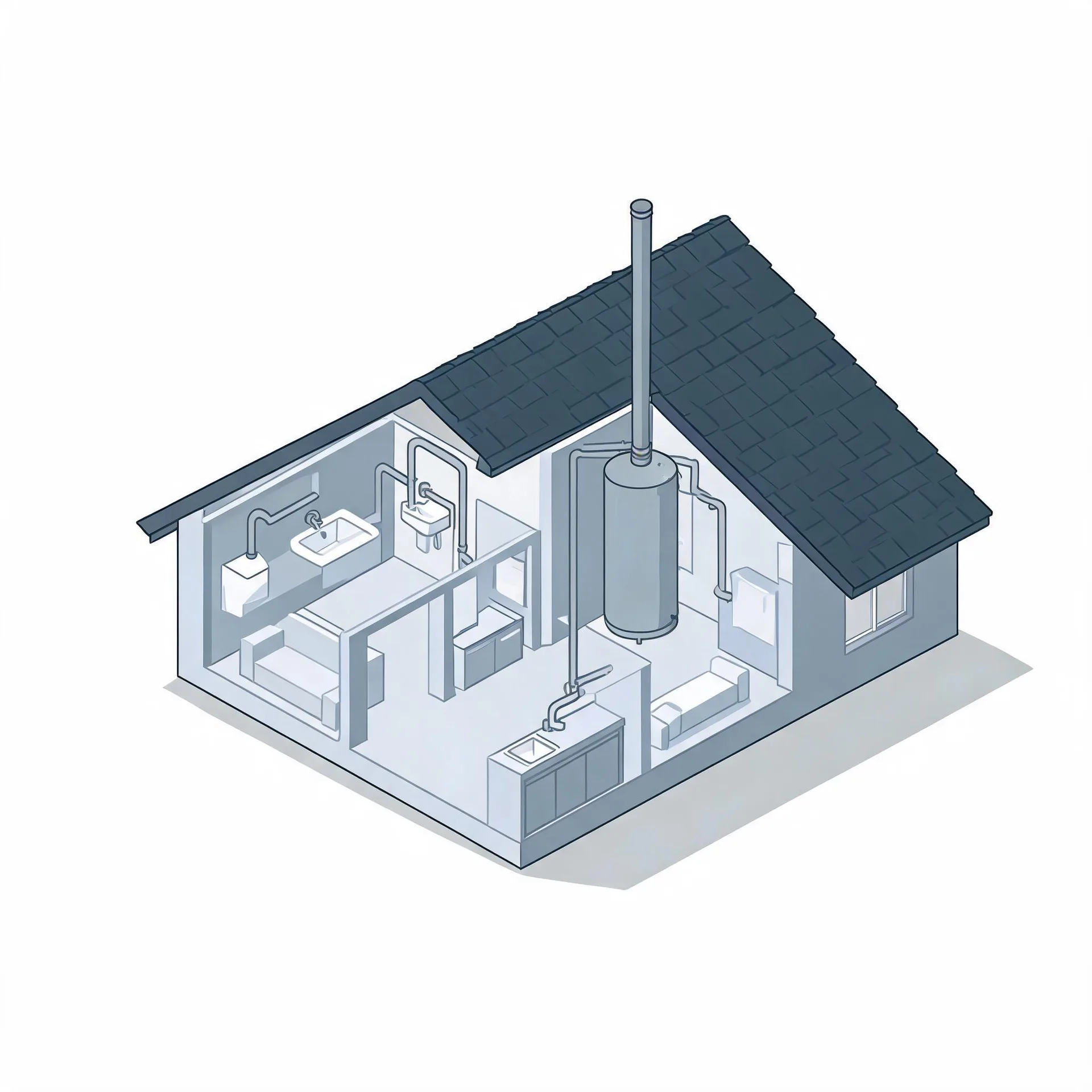
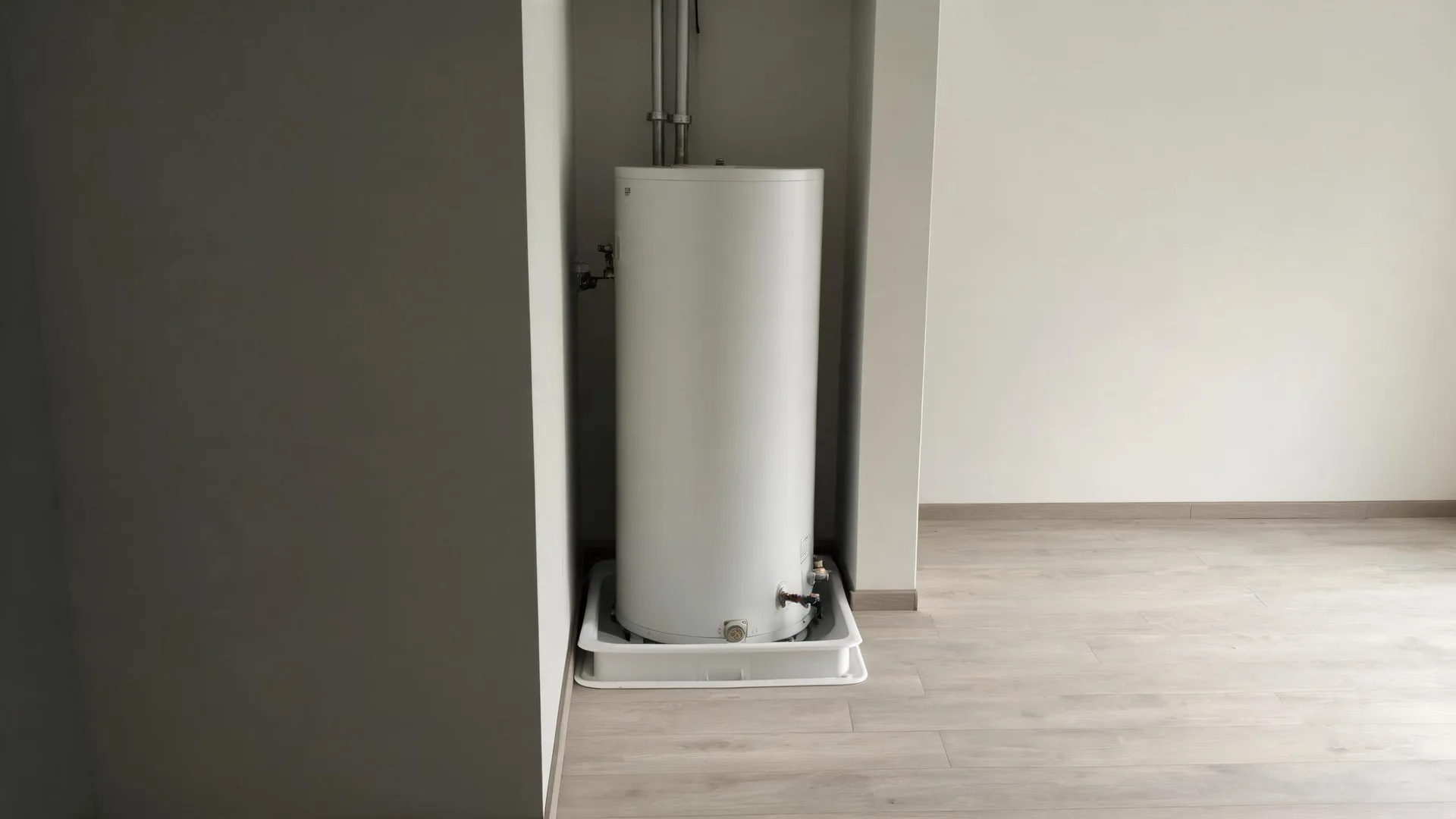
The storage tank is the piece most homeowners recognize first. It sits in a utility room, basement, or garage and holds the water that gets heated for daily use. Attached to it are the inlet and outlet connections that bring cold water in and send hot water out to every fixture in the house.
The pressure relief valve mounts directly on the tank and opens automatically if pressure builds beyond a safe level. A drain valve sits near the base. The flue or venting pipe runs from the top of a gas unit up and out of the house, carrying combustion gases away from the living space.
The drawing shows a typical layout, and a licensed contractor determines exactly what the installation requires in your home.
Find a contractor in Fayette CountyFayette County, by the numbers
43 severe weather events were recorded in Fayette County, Indiana between 2015 and 2024.
NOAA National Centers for Environmental Information, Storm Events Database, bulk CSV export, events 2015-01-01 through 2024-12-31.Half the homes in Fayette County, Indiana were built in 1962 or earlier (2020-2024 ACS 5-year).
U.S. Census Bureau, 2020-2024 American Community Survey 5-Year EstimatesFayette County, Indiana holds 10,905 housing units (2020-2024 ACS 5-year).
U.S. Census Bureau, 2020-2024 American Community Survey 5-Year EstimatesOwners occupy 72.1% of the occupied homes in Fayette County, Indiana (2020-2024 ACS 5-year).
U.S. Census Bureau, 2020-2024 American Community Survey 5-Year EstimatesSevere Weather Events in Fayette County
Fayette County's weather puts real demands on water heating equipment over time. How often the area sees severe weather shapes how hard that equipment works and how soon it may need to be replaced or upgraded.
43 severe weather events, 2015–2024. Source: NOAA National Centers for Environmental Information, Storm Events Database.